How Humidity and Rain Affect Deck Staining in New Jersey
If you’re a New Jersey homeowner staring at a faded, peeling deck and thinking it’s finally time to restrain it, you’re not alone. But here’s the problem: our humid summers, surprise thunderstorms, and sticky air can quietly sabotage your project before it even has a chance to cure. In Morris, Essex, Union, and Passaic Counties, moisture isn’t just an inconvenience; it’s the number one reason deck stains fail early. At Inside Out Painting, we’ve restored countless decks damaged by poor timing and weather miscalculations, and we know exactly how to work with, not against, New Jersey’s climate.
Why Weather Matters More in New Jersey
New Jersey isn’t Arizona. We deal with:
- 70%+ summer humidity
- Afternoon thunderstorms that roll in without warning
- Morning dew that lingers longer than you think
- Freeze-thaw cycles that stress outdoor wood
Deck staining isn’t just about brushing on color; it’s about penetration and curing. And moisture directly interferes with both.
When humidity and rain aren’t accounted for, you end up with:
- Blotchy color
- Peeling within months
- Mildew under the finish
- A project you have to redo far too soon
Let’s break it down.
The Impact of High Humidity on Deck Staining
1. Prolonged Drying Times
Can you stain a deck in high humidity?
Technically, yes. Should you? Not usually. When humidity climbs above 70%, the air is already saturated with moisture. Stains, whether oil-based or water-based, cure by evaporation. In heavy New Jersey humidity, drying times can easily double. What should take 4–6 hours may take 10–12. And that extended window increases the risk of:
- Dust contamination
- Uneven absorption
- Rain exposure before full curing
The sweet spot? 40%–70% relative humidity.
2. Poor Adhesion & Peeling
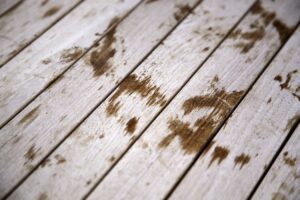
Does humidity affect staining? Absolutely. If the wood itself contains excessive internal moisture, the stain cannot penetrate the fibers. Instead, it sits on the surface. That’s when you see:
- Flaking
- Blistering
- Early peeling (sometimes within one season)
We’ve seen decks in Essex County that looked perfect in June and were peeling by September because the wood wasn’t dry enough at the time of application. For best results, wood moisture content should be under 15%. A simple moisture meter (inexpensive and worth it) removes the guesswork.
3. Mildew Growth
- New Jersey humidity creates ideal conditions for mildew. If mildew spores are present and moisture gets trapped under a fresh stain, you’ll start seeing black or green spots pushing through. Once mildew is present under the stain, the only viable fix is stripping and redoing the surface.
The Impact of Rain on Deck Staining
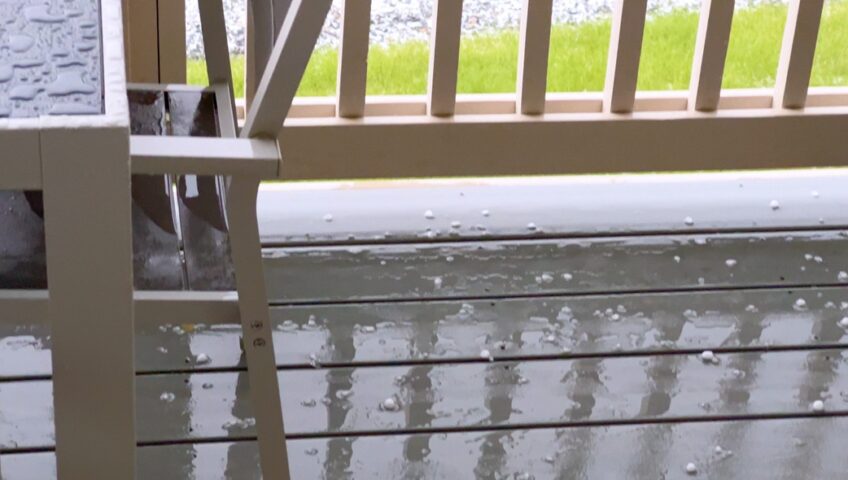
What Happens If It Rains While Staining Your Deck?
This is one of the most common concerns of NJ homeowners. If rain hits before the stain has cured:
- Pigment can wash away (the “washout effect”)
- You’ll see streaking and uneven color
- The surface may become tacky or sticky
- Adhesion may weaken
In many cases, the deck must dry completely before being lightly sanded and recoated.
Wood Swelling & Shrinking
Rain affects more than the surface. When wood absorbs water, it swells. Then, when the sun returns, it shrinks. That expansion-and-contraction cycle stresses the stain’s bond. In New Jersey, especially during stormy summer patterns, this movement can dramatically shorten the lifespan of your finish.
How Long Should You Wait After Rain?
As a general rule, wait at least 24–48 hours after rain before staining. The surface may appear dry while moisture remains trapped deep inside.
Two ways to check:
- Moisture meter reading under 15%.
- The “water test”: if water beads up, the wood is still too wet.
What Is the Best Weather to Stain a Deck in New Jersey?
For optimal results, picking the right weather is of the essence.
Ideal Conditions:
- 50–85°F temperatures
- 40–70% humidity
- 48–72 hour rain-free forecast
- Cloud cover or light shade (avoid direct midday sun)
Best Seasons in NJ
Late Spring & Early Fall
These seasons typically offer more stable weather patterns and moderate humidity. While it’s hot, late August often brings drier air and fewer storm systems, creating ideal curing conditions before fall sets in.
Avoid Direct, Hot Sun
Even if humidity is low, staining in direct sunlight can cause the surface to “flash dry.” That means the top layer dries too fast, preventing deep penetration. Result? Premature fading and uneven wear.
What If Your Deck Was Stained in Bad Weather?
Sometimes the weather shifts unexpectedly. If it rains too soon:
- Allow full drying.
- Inspect for blotchiness or peeling.
- Sand affected areas.
- Apply a thin recoat.
If mildew appears, cleaning and possibly stripping may be required. At that point, many homeowners decide it’s time to call the professionals. And honestly, that’s often the smarter financial move.
Why Professional Timing Makes the Difference
Deck staining in New Jersey isn’t just about product choice, it’s about climate strategy. At Inside Out Painting, we:
- Monitor humidity levels before scheduling
- Use moisture meters on-site
- Plan around multi-day forecast windows
- Apply stains under optimal penetration conditions
- Conduct a final walkthrough before payment
Because we’re a family-owned, local company serving Morris, Essex, Union, and Passaic Counties, we understand the weather patterns here. We’ve worked through surprise storms. We’ve seen what happens when decks are rushed before a holiday weekend. And we don’t cut corners. If managing humidity readings, rain windows, and moisture content feels overwhelming, we’re here to handle it.
You can learn more about our professional deck restoration services and our approach to climate-specific projects. For additional weather guidance, the National Weather Service provides reliable humidity and forecast data you can monitor before starting any outdoor project.
Commonly Asked Questions
Can you stain a deck in high humidity?
Yes, but drying times increase and adhesion may suffer. Stay between 40–70% humidity for best results.
What happens if it rains while staining your deck?
Rain can wash away pigment, cause streaking, and weaken adhesion if the stain hasn’t cured.
Does humidity affect staining?
Yes. High humidity slows evaporation and reduces penetration, leading to peeling and mildew.
What is the best time of year to apply deck stains?
Mild temperatures (50–85°F), moderate humidity, and a 48–72 hour rain-free window.
Don’t Let New Jersey Weather Ruin Your Investment
Too many homeowners spend thousands restoring a deck only to see it peel within a year, not because the stain was bad, but because the timing was. New Jersey’s humidity and rain patterns demand planning, patience, and precision.
If you want your deck to look beautiful and last for years, not months, Inside Out Painting is ready to help. Call us at 973-743-880 to schedule a free estimate and get your deck restoration done right the first time.