
Deck Restoration Tips for Surviving New Jersey Winters
How to Protect and Restore Your Deck Before Harsh New Jersey Winters
Homeowners across New Jersey, from Montclair to Morristown, know how brutal winters can be on wood decks. When freezing rain, ice, and snow settle in, even the sturdiest boards can warp, crack, or peel if they aren’t properly protected. The frustration? You spend good money staining your deck each summer, only to find it dull, faded, or splintering by spring. That’s where Inside Out Painting, New Jersey’s trusted painting and deck restoration experts, step in, helping local homeowners restore and protect their decks so they last through every season, no matter how harsh the weather gets.
Why Deck Restoration Matters Before Winter Hits
New Jersey winters bring extreme temperature swings, freezing moisture, and heavy snow loads, all of which can penetrate unsealed wood. When water freezes inside the grain, it expands, causing cracks, warping, and peeling stain. The result? Costly repairs and an unsafe, weathered deck by spring.
Proper restoration before winter acts like armor. By cleaning, sealing, and inspecting your deck early, you can prevent water intrusion and preserve the structure’s integrity for years to come.
Step 1: Deep Clean and Clear the Deck
- Before any coating or sealing, start by giving your deck a thorough cleaning. Sweep away leaves, dirt, and debris that can trap moisture and cause damage. Then, use a professional-grade deck cleaner (specific to wood or composite) to lift mildew and embedded grime.
Pro Tip: Clean on a mild, overcast day to prevent streaking or flash drying. Once washed, allow the surface to dry completely—usually 24 to 48 hours—before proceeding to repairs or sealing.
Step 2: Inspect for Damage and Loose Hardware
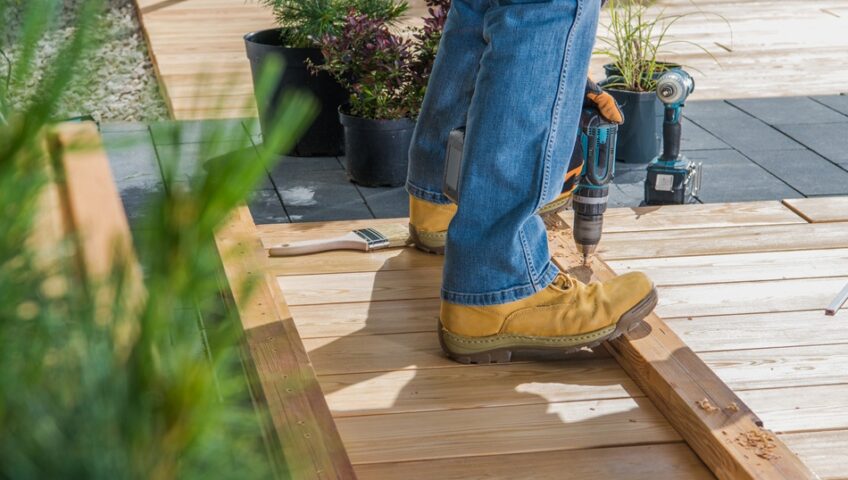
- Walk your deck carefully and check for loose nails, soft spots, cracked boards, or wobbly railings. Address these now because freezing conditions only worsen existing damage. Tighten screws, replace any weakened boards, and sand down rough patches to ensure a smooth, even surface.
Inside Out Painting’s restoration team often finds that early intervention saves homeowners hundreds in springtime repairs.
Step 3: Seal and Stain for Maximum Protection
A high-quality, water-repellent sealant is your deck’s best defense against New Jersey’s snow and sleet. Choose a formula that provides both moisture resistance and UV protection.
- For natural wood decks: opt for an oil-based stain with deep penetration.
- For composite materials: use a specialized sealer designed for synthetic decking.
Apply your sealant evenly and let it cure before temperatures drop below 50°F. This creates a protective barrier that keeps out water and prevents fading or splitting during winter.
Step 4: Prep and Store Outdoor Furniture
- Planters, rugs, and patio furniture trap moisture beneath them. Move everything off the deck, clean it, and store it in a dry area, such as a garage or shed. If storage isn’t possible, prop furniture on wooden blocks or rubber mats to allow airflow underneath.
Step 5: Cover and Protect the Deck Surface
- If your deck won’t be used during the winter, cover it with a breathable tarp or a weatherproof cover. Avoid plastic sheeting, which can trap condensation and lead to rot. Secure the cover tightly to prevent wind damage.
Step 6: Snow and Ice Management During Winter
When snow arrives, clear it promptly to prevent buildup and ice damage:
- Use a plastic shovel or a soft-bristled broom. Metal tools can scratch the wood and remove the finish.
- Avoid rock salt and harsh deicers. Instead, use calcium magnesium acetate (CMA), which is safer for both decks and surrounding landscaping.
- Shovel along the grain (not across) to prevent gouging or surface damage.
- Check gutters and downspouts to ensure melting snow drains properly away from the deck.
Step 7: Don’t Forget Post-Winter Maintenance
When spring returns, inspect your deck again. Look for fading, peeling, or water spots; early signs that it may need a fresh coat of stain or sealant. Regular maintenance every year or two helps extend your deck’s lifespan dramatically, especially in a climate as unpredictable as New Jersey’s.
People Also Ask

Can you refinish a deck in the winter?
It’s best to refinish before winter arrives, as cold temperatures prevent proper curing. However, if the weather permits (above 50°F and dry), you can perform small touch-ups during mild days.
How to make a deck usable in winter?
Use outdoor heaters, weatherproof rugs, and covered pergolas to make the space cozy. Always clear snow and ice to ensure safety and prevent slipping.
How to protect decking in the winter?
Seal it before freezing weather, clear snow promptly, and avoid salt or harsh ice melts. Regular inspections help catch damage early.
What is the 30cm rule for decking?
This rule refers to maintaining a minimum 30cm clearance between the deck and the ground for ventilation, which helps prevent moisture buildup and rot.
Trust New Jersey’s Deck Restoration Experts
If all this prep sounds like a lot to handle, you’re not alone. Many homeowners simply don’t have the time or tools to do it right before the first frost. That’s where Inside Out Painting makes it easy. Their experienced team restores, seals, and protects decks across Morris, Essex, Union, and Passaic Counties, leaving your outdoor space ready to weather the winter beautifully.
Call 973-743-8800 today to schedule your complimentary estimate and ensure your deck remains strong, safe, and stunning throughout every season.