
Why Exterior Paint Fails Faster in New Jersey Weather
New Jersey homeowners dealing with peeling siding, faded color, bubbling trim, or cracks shortly after repainting are facing more than a cosmetic problem. Cold winters, humid summers, frequent rain, strong sunlight, and sudden temperature changes can place constant stress on an exterior coating. Inside Out Painting helps homeowners across Morris, Essex, Union, and Passaic Counties protect their homes through careful preparation, proper product selection, and painting schedules suited to New Jersey weather.
Exterior paint is not just a decorative finish. It acts as a protective barrier while the material beneath it repeatedly gets wet, dries, heats up, cools down, expands, and contracts. In New Jersey, that is a demanding job.
Why Does Exterior Paint Fail So Quickly in New Jersey?
Exterior paint often fails when moisture, temperature changes, poor surface preparation, or incorrect application conditions weaken its bond with the surface. New Jersey experiences cold winters, warm and humid summers, rain, snow, and frequent temperature changes. These conditions can cause siding, trim, masonry, and other exterior materials to move throughout the year. Common reasons for early paint failure include:
- Moisture entering wood, siding, or masonry.
- Repeated freezing and thawing.
- High summer humidity.
- Strong ultraviolet exposure.
- Painting in unsuitable temperatures.
- Poor cleaning, scraping, sanding, or priming.
- Leaking gutters, roofs, or window trim.
- Using the wrong paint for the surface.
Weather may trigger the damage, but poor preparation and unresolved moisture issues often determine how quickly it appears.
Moisture Is the Most Common Cause of Paint Failure
Moisture is one of the main reasons exterior paint peels, bubbles, and cracks. Water can enter behind painted surfaces through:
- Damaged gutters
- Failed caulking
- Roof or flashing leaks
- Cracks in stucco or masonry
- Open siding joints
- Poor ventilation
- Unsealed wood trim
- Shrubs growing tightly against the house
When wood absorbs moisture, it expands. As it dries, it contracts. The paint film must move with the surface. If the paint is brittle, poorly bonded, or applied over damp material, it may begin to lift and peel. This is why repainting over a damaged area without fixing the moisture source rarely works. The new coating may fail in the same place after the next wet season.
How Do Freeze-Thaw Cycles Damage Exterior Paint?
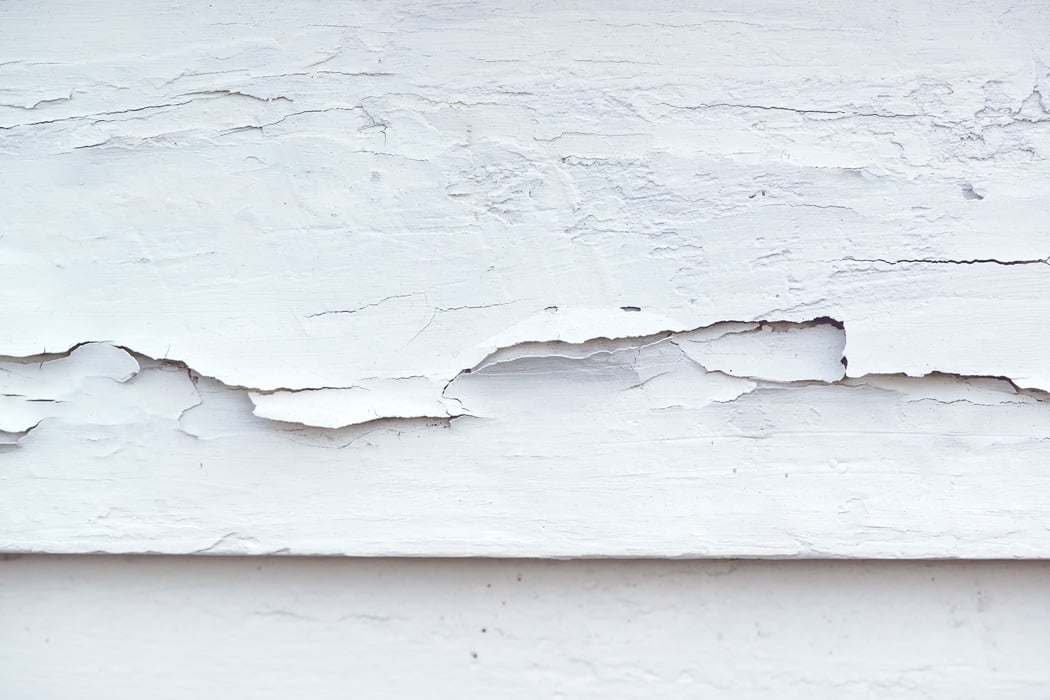
Freeze-thaw damage occurs when moisture enters cracks, exposed wood, masonry pores, or gaps around trim. When temperatures fall below freezing, trapped water expands. When temperatures rise, it melts. Repeated freezing and thawing gradually widen cracks and weaken paint adhesion. Signs of freeze-thaw damage include:
- Flaking paint.
- Cracks that resemble alligator skin.
- Peeling around windows and doors.
- Separation along siding joints.
- Crumbling paint on masonry.
- Bare wood on trim and railings.
For example, snow may collect on a painted windowsill, melt during the day, and refreeze overnight. If the caulk or paint film has opened, moisture can enter the wood. By spring, a small crack may have become peeling paint or damaged trim.
How Does Summer Humidity Affect Exterior Paint?
Humidity affects both newly applied paint and existing coatings. Paint needs moisture and solvents to evaporate at a controlled rate. When the air is already humid, drying may slow down. The paint can remain soft, cure unevenly, or fail to bond properly. High humidity may contribute to:
- Bubbling or blistering
- Slow drying
- Uneven sheen
- Poor adhesion
- Mildew growth
- Dirt sticking to soft paint
Painting is not impossible on every humid day. However, the siding must be dry, rain should not be expected, and temperatures must remain within the paint manufacturer’s recommended range. Professional painters also consider surface temperature, sunlight, shade, wind, humidity, and overnight dew before beginning.
Why Does Exterior Paint Fade in the Sun?
Ultraviolet rays gradually break down the binders that hold paint pigment together. Over time, the color becomes less vibrant and the surface may develop a powdery residue called chalking. Fading is often most noticeable on:
- South- and west-facing walls.
- Dark-colored siding.
- Garage doors.
- Shutters.
- Trim exposed to afternoon sun.
- Surfaces coated with lower-quality paint.
Dark colors absorb more heat than lighter shades. This can increase surface movement and speed up fading.
How Can Exterior Paint Fading Be Prevented?
Fading cannot be completely stopped, but it can be reduced by:
- Using high-quality exterior acrylic paint.
- Selecting products with strong UV resistance.
- Applying the recommended number of coats.
- Choosing colors suited to the home’s exposure.
- Cleaning mildew and chalk before painting.
- Avoiding application on extremely hot surfaces.
Some strong reds, yellows, blues, and dark colors may fade sooner than muted or lighter shades. A professional painter can help balance color preferences with the home’s sun exposure.
At What Temperature Can Exterior Paint Be Ruined?
There is no single temperature limit for every paint product. Many exterior paints should be applied when temperatures are above 50°F. Some modern coatings can be used at temperatures as low as 35°F. Cold conditions can interfere with proper curing and film formation. This may result in weak adhesion, cracking, or peeling.
Heat can also cause problems. Paint applied to a surface heated by direct sunlight may dry too quickly. The top layer can form a skin before the coating underneath has properly leveled or bonded. This may lead to:
- Brush marks
- Lap marks
- Blistering
- Uneven texture
- Weak adhesion
The best painting weather is usually mild, dry, and stable rather than extremely hot or cold.
Poor Surface Preparation Makes Weather Damage Worse
New paint cannot properly bond to dirt, mildew, chalk, loose paint, or damaged wood. Too many homeowners spend thousands repainting their homes only to see the same areas peel because the project focused on color rather than preparation. A professional exterior painting process should include:
- Inspecting the home for peeling paint, damaged caulk, moisture, cracks, and mildew.
- Cleaning dirt, chalk, algae, pollen, and loose debris.
- Allowing the exterior to dry fully.
- Scraping and sanding loose or failing paint.
- Repairing cracks, damaged trim, and water entry points.
- Priming bare wood, stains, metal, masonry, and repaired areas.
- Applying the correct exterior finish coats.
Skipping these steps may reduce the initial cost, but it often shortens the lifespan of the paint job.
How Can New Jersey Homeowners Make Exterior Paint Last Longer?
- A longer-lasting finish begins before painting starts. First, fix water problems. Clean gutters, repair flashing, replace failed caulk, and investigate areas that stay wet. Second, choose a stable weather window. Check temperatures, humidity, overnight lows, rain, and dew.
Third, use the right product. Wood, aluminum, fiber cement, stucco, masonry, and metal may require different primers and coatings. Finally, inspect the exterior every year. Small cracks, mildew, open joints, and bare spots are easier and less expensive to repair before moisture spreads.
Protect Your Home From Premature Paint Failure
New Jersey weather cannot be controlled, but proper preparation, product selection, application, and maintenance can significantly improve paint performance. Inside Out Painting provides professional exterior painting services throughout Morris, Essex, Union, and Passaic Counties. Their trained, full-time painters focus on detailed preparation, high-quality finishes, and a final walkthrough before payment is collected. If your exterior is peeling, fading, cracking, or bubbling, call 973-743-8800 to request a free estimate.
Frequently Asked Questions
What is the most common reason exterior paint fails?
Moisture is the most common cause. Water entering through leaks, damaged caulk, open joints, or damp surfaces can weaken adhesion and push paint away from the home.
How does weather affect exterior paint?
Rain and humidity introduce moisture, while sunlight causes fading. Cold temperatures can affect curing, and repeated temperature changes force surfaces to expand and contract.
How can exterior paint fading be prevented?
Use premium exterior paint, choose UV-resistant products, apply the correct number of coats, and select colors that suit the home’s sun exposure.
Can you paint a house immediately after rain?
Usually not. The siding must be completely dry before painting. Wood and masonry may hold moisture even when the surface looks dry.