

Why Your Exterior Paint Doesn’t Last as Long as It Should
Homeowners across Morris, Essex, Union, and Passaic Counties who invest in exterior painting expect their home to look great for years. However, many find that the color fades, peels, or cracks far earlier than it should, sometimes as soon as two seasons. It’s frustrating, especially when you’re trying to maintain curb appeal and protect your home from New Jersey’s weather. Inside Out Painting understands the disappointment and financial stress that comes with a failing paint job, and our highly trained, full-time team is here to explain why this happens and how to prevent it with the right prep, products, and process.
Your home is exposed to some of the most extreme weather conditions in the country. Between humid summers, cold winters, and strong UV exposure, New Jersey homes take a beating. But the weather is only part of the story. Most premature paint failures are a result of how the painting was done.
Listed below are the top 10 most common reasons for premature exterior paint failure.
1. The Surface Was Never Properly Cleaned
Paint can only stick to what’s underneath it. If the siding still has dirt, pollen, mildew, chalking, or oxidation, the paint bonds to that, not the home. In Montclair, Bloomfield, Morristown, and other tree-heavy towns, mildew builds fast, and if it isn’t washed off before painting, peeling is almost guaranteed. This is why pressure washing or soft washing is essential.
When this is skipped:
- Paint blisters or curls.
- Peeling starts within months.
- Coats look uneven and splotchy.
Prep should never be rushed.
2. Old, Loose, or Rotted Paint Was Painted Over
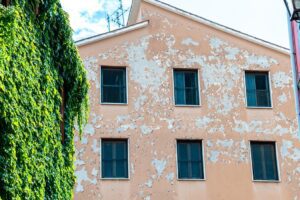
A painter who doesn’t want to spend time scraping will simply paint over loose edges or rotted wood. However, once new paint is applied over unstable material, it’s only a matter of time before everything comes loose.
Signs this happened:
- Paint fails in patches.
- Wood beneath continues deteriorating.
- Moisture becomes trapped.
- Cracks widen over time.
Exterior painting is a form of restoration work, not just a matter of coloring.
3. Moisture Was Still in the Siding When Painting Began
New Jersey humidity can be deceiving. Siding often appears dry, even when moisture is still hidden beneath the surface. Professional painters use moisture meters for this exact reason. If a painter simply touches the wall and says, “it’s dry,” that’s a shortcut.
Paint applied on damp siding leads to:
- Blistering
- Bubbles
- Peeling in sheets
- Mold growth
Moisture is one of the most common and most expensive causes of premature paint failure.
4. The Surface Wasn’t Sanded Enough
Sanding provides the paint with a surface to grip. Without this “tooth,” paint sits on top of the surface instead of bonding into it.
This is especially important for:
- Glossy surfaces
- Trim, fascia, soffits
- Previously painted doors and shutters
- Metal or high-sheen siding
Skipping sanding is a classic budget-contractor shortcut.
5. The Wrong Primer Was Used
Primer is not optional on most New Jersey homes, especially older wood homes.
Primer helps by:
- Creating a stable base
- Blocking stains
- Reducing absorption
- Helping the topcoat grip
- Sealing bare or repaired areas
When primer is skipped to “save time,” the paint may look fine at first, but fail years earlier than it should.
6. Cheap, Low-Quality Paint Was Used
Not all paint is created equal. Budget paint lacks the binders, mildewcides, and UV-resistant ingredients needed to withstand New Jersey’s conditions.
Cheap paints have the following shortcomings:
- Fade fast
- Chalk early
- Break down under UV
- Crack and peel sooner
This is why experts recommend premium quality paint for its long-lasting durability.
7. The Wrong Type of Paint Was Used for the Material
Different surfaces need different coatings, for example:
- Wood needs flexible, breathable paint.
- Masonry needs vapor-permeable coatings.
- Metal requires rust-inhibitive primers.
- Vinyl siding needs vinyl-safe formulations.
If a generic or mismatched product is used, failure occurs early, regardless of the application’s quality.
8. The Weather Was Wrong on Painting Day
New Jersey weather can shift fast. If a painter doesn’t monitor conditions, the paint won’t cure properly. Paint should not be applied under the following conditions:
- In high humidity
- Before or after a rainstorm
- In direct, hot sunlight
- During extreme heat or cold
- When nighttime temperatures drop too low
Even if the job looks good at first, curing issues cause cracking and peeling later.
9. Only One Coat Was Applied
Two coats are standard for professional durability. Many low-cost contractors apply one coat to save time and materials. One coat fails due to the following reasons:
- Weak coverage
- Poor UV protection
- Shortened lifespan
- Faster fading
- Less resistance to moisture
Thin or uneven coats break down significantly faster.
10. UV Exposure and Seasonal Extremes Accelerate Wear
New Jersey has harsh sun exposure in the summer and aggressive freeze–thaw cycles in the winter. Homes with strong western or southern exposure, such as those in Parsippany, Summit, Verona, and Livingston, tend to experience noticeable fading earlier.
Meanwhile, shaded sides develop mildew. Homes located near wooded areas or lakes tend to accumulate more moisture, which accelerates deterioration.
Even the best paint can only fight the environment if it is applied with proper prep and premium materials.
People Also Ask
How long should exterior paint last?
With proper prep and quality products, 7–10 years is typical for New Jersey homes. Poor prep or cheap paint can reduce this to just 2–4 years.
Why is my exterior paint fading?
UV exposure, low-quality paint, and improper application all accelerate fading — especially on sun-facing sides.
Which brand of exterior paint lasts the longest?
Premium paints from Benjamin Moore or Sherwin-Williams have the best longevity due to superior binders and UV-resistant pigments.
How to make paint last outside?
Proper cleaning, repairs, priming, timing, product selection, and application technique are critical to long-term durability.
Why Inside Out Painting Jobs Last Longer
Inside Out Painting has built a strong reputation across Morris, Essex, Union, and Passaic Counties because:
- We don’t skip prep.
- We don’t use cheap paint.
- We repair surfaces before painting.
- Our painters are full-time, not short-term hires.
- We schedule painting based on weather, not convenience.
If you want an exterior paint job that actually lasts, our team delivers high-quality craftsmanship backed by years of experience.
Call Today for a Long-Lasting Exterior Paint Job
If your exterior paint is failing or you’re planning your next project, our team can inspect your home and explain exactly what it needs.
Call Inside Out Painting at 973-743-8800 to schedule your free estimate.